
Delve into the world of professional tax preparation where accuracy, efficiency, and financial benefits intertwine to offer a seamless tax filing experience. Learn how expert services can revolutionize your approach to taxes.
Explore the advantages of entrusting your tax preparation to professionals and how it can optimize your financial outcomes.
Benefits of professional tax preparation
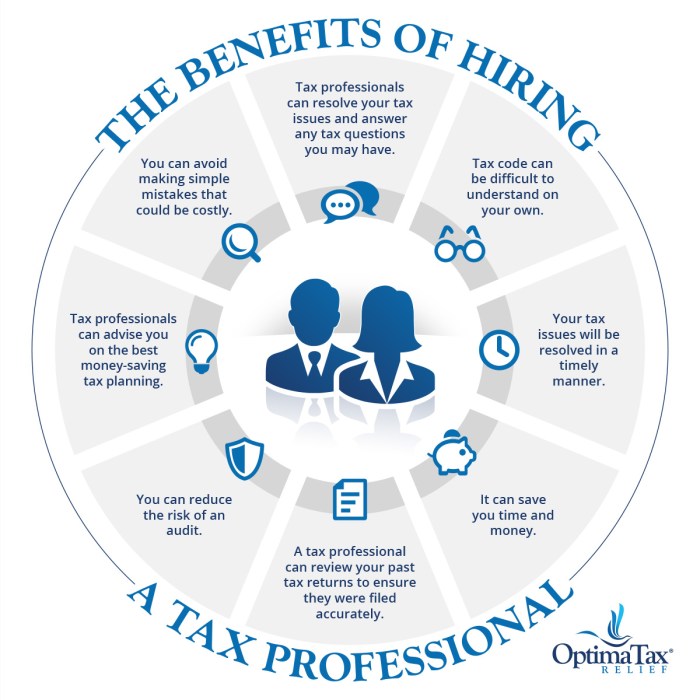
Professional tax preparation services offer a variety of benefits that can help individuals and businesses navigate the complex world of taxes with ease.
Minimize errors in tax filing
Professional tax preparers have the knowledge and expertise to accurately prepare tax returns, reducing the risk of errors that could lead to penalties or audits. They stay updated on tax laws and regulations, ensuring compliance and accuracy in your filings.
Time-saving advantages
By outsourcing your tax preparation to professionals, you can save valuable time that would otherwise be spent gathering documents, filling out forms, and navigating complex tax codes. This allows you to focus on other important aspects of your personal or business finances.
Money-saving advantages
Professional tax preparers can help identify deductions, credits, and other tax-saving opportunities that you may have overlooked. Their expertise can result in significant savings on your tax bill, maximizing your financial resources.
Maximize tax refunds
One of the key benefits of professional tax preparation is the ability to maximize your tax refunds. Tax preparers are skilled at finding all available credits and deductions that you qualify for, ensuring you receive the highest refund possible.
Tax planning

Tax planning plays a crucial role in financial management as it helps individuals and businesses optimize their tax situation, minimize tax liabilities, and achieve their financial goals effectively.
Importance of Tax Planning
Tax planning involves analyzing financial situations to ensure all elements work together in the most tax-efficient manner. By strategically planning ahead, individuals can reduce tax liabilities, maximize tax deductions, and ultimately save money.
- Regularly reviewing and adjusting financial decisions to minimize tax liabilities
- Utilizing tax-advantaged accounts like IRAs and 401(k) to save for retirement
- Timing investment gains and losses to offset each other for tax purposes
- Strategically planning charitable contributions to maximize tax deductions
Achieving Financial Goals through Tax Planning
Tax planning helps individuals align their financial strategies with their long-term goals. By minimizing tax burdens, individuals can allocate more resources towards achieving milestones such as buying a home, saving for education, or planning for retirement.
- Setting specific financial goals and creating tax-efficient strategies to reach them
- Utilizing tax-saving investment vehicles to grow wealth over time
- Maximizing tax deductions to free up more funds for savings and investments
Reducing Tax Liabilities
Tax planning aims to reduce tax liabilities through various strategies that leverage deductions, credits, and exemptions. By taking advantage of available tax breaks and incentives, individuals can lower their overall tax burden and keep more of their hard-earned money.
- Identifying tax credits and deductions applicable to individual circumstances
- Employing tax-deferral strategies to postpone tax payments and maximize savings
- Implementing tax-efficient estate planning to minimize estate taxes for heirs
Tax preparation
When it comes to tax preparation, individuals have the option to either do it themselves (DIY) or seek the help of a professional. Both approaches have their own set of advantages and disadvantages.
DIY Tax Preparation vs Professional Tax Preparation
DIY tax preparation can be cost-effective and convenient for those with simple tax situations. However, it may lead to errors or missed opportunities for deductions. On the other hand, professional tax preparation ensures accuracy, compliance, and access to tax-saving strategies, but it comes at a higher cost.
Complexities in Tax Preparation for Different Types of Income
Preparing taxes for various types of income, such as self-employment or investments, can be complex due to different tax laws, deductions, and credits involved. Self-employment income requires meticulous record-keeping, while investment income may involve capital gains and losses calculations.
Tips for Effective Tax Preparation
- Organize all financial documents and records throughout the year to avoid missing important information.
- Stay updated on tax law changes and seek professional advice for complex tax situations.
- Utilize tax software or online tools to streamline the process and reduce errors.
- Double-check all entries and calculations to ensure accuracy before filing.
Benefits of Early Tax Preparation and Filing
Early tax preparation allows individuals to avoid the last-minute rush, reduce stress, and have ample time to gather any missing documents or information. Filing early also helps in detecting and correcting errors before the deadline, potentially avoiding penalties or audits.
Tax optimization
Tax optimization is the strategic planning and management of financial activities to minimize tax liability and maximize tax benefits. It involves utilizing legal tax-saving strategies to ensure individuals and businesses pay the least amount of taxes required by law.
Strategies for Individuals
- Contributing to retirement accounts, such as a 401(k) or IRA, to lower taxable income.
- Claiming tax deductions for expenses like mortgage interest, medical expenses, and charitable donations.
- Utilizing tax credits like the Earned Income Tax Credit or Child Tax Credit to reduce tax liability.
Strategies for Businesses
- Choosing the right business structure to benefit from tax advantages, such as an S-Corp or LLC.
- Implementing tax planning strategies to defer income or accelerate deductions.
- Utilizing tax incentives and credits for research and development, energy efficiency, or hiring employees from certain demographics.
Maximizing Tax Benefits
Tax optimization helps individuals and businesses maximize tax benefits by legally reducing their tax burden. By strategically planning their finances and taking advantage of available deductions, credits, and incentives, taxpayers can keep more of their hard-earned money and invest it in ways that benefit them in the long run.
Tax Optimization vs. Tax Evasion
Tax optimization is a legitimate way to minimize tax liability through strategic financial planning. It involves taking advantage of tax laws and incentives to pay the appropriate amount of taxes required by law. On the other hand, tax evasion is illegal and involves intentionally underreporting income, inflating deductions, or engaging in other fraudulent activities to evade paying taxes. It is important to distinguish between tax optimization, which is legal and beneficial, and tax evasion, which is punishable by law.
Tax returns
When it comes to tax returns, it is essential to understand the process of filing them correctly and the importance of doing so. Filing tax returns is a way for individuals and businesses to report their income, expenses, and other financial information to the government for tax assessment purposes.
Common Mistakes to Avoid when Filing Tax Returns
- Failure to report all income earned during the year
- Incorrectly claiming deductions or credits
- Submitting incomplete or inaccurate information
- Missing deadlines for filing tax returns
- Not keeping proper documentation for tax deductions
Handling Tax Return Audits
- Respond promptly and provide all requested documentation
- Seek professional help if needed to navigate the audit process
- Stay organized and keep all records in order
- Understand your rights during the audit and cooperate with the authorities
- Review the audit findings and take necessary actions to resolve any discrepancies
Significance of Accurate and Timely Tax Return Submissions
- Avoid penalties and interest charges for late or incorrect filings
- Ensure compliance with tax laws and regulations
- Receive any refunds owed to you in a timely manner
- Build a good reputation with tax authorities by demonstrating honesty and transparency
- Reduce the risk of audits or investigations by submitting accurate tax returns
In conclusion, professional tax preparation emerges as a valuable asset in ensuring precise, timely, and rewarding tax filing. By harnessing the expertise of professionals, individuals can navigate the complexities of tax regulations with ease and confidence.
Q&A
What are the benefits of hiring a professional for tax preparation?
Professional tax preparation can minimize errors, save time, maximize refunds, and potentially save money through expert guidance and knowledge.
How early should I consider professional tax preparation services?
It is advisable to engage professional tax preparation services early in the tax season to ensure thorough and accurate filing.
Is there a difference between tax optimization and tax evasion?
Yes, tax optimization focuses on legally maximizing tax benefits and credits, whereas tax evasion involves illegal methods to avoid paying taxes.


