As Tax preparation software takes center stage, this opening passage beckons readers into a world crafted with good knowledge, ensuring a reading experience that is both absorbing and distinctly original.
Exploring the intricacies of tax planning, preparation, optimization, and returns, this article delves into the realm of tax management, shedding light on the benefits and strategies involved.
Tax Planning
Tax planning plays a crucial role in financial management by helping individuals and businesses optimize their tax liabilities and maximize savings. By strategically planning for taxes, individuals can ensure that they are not overpaying and are taking advantage of all available tax deductions and credits.
Importance of Tax Planning
Effective tax planning is essential for minimizing tax liabilities and maximizing savings. It involves analyzing financial situations to identify opportunities for reducing tax burdens, taking advantage of tax incentives, and planning for future tax obligations. By implementing tax planning strategies, individuals and businesses can ensure they are in compliance with tax laws while optimizing their financial resources.
- Regularly review tax laws and regulations to stay informed about changes that may impact tax liabilities.
- Utilize tax-deferred investment accounts, such as IRAs and 401(k)s, to reduce taxable income.
- Take advantage of tax credits and deductions, such as education credits, charitable contributions, and business expenses.
- Plan for major life events, such as marriage, home purchase, or retirement, to minimize tax implications.
Impact of Tax Planning on Financial Decision-Making
Tax planning directly influences financial decision-making by considering the tax implications of various choices. Individuals and businesses can make informed decisions about investments, expenditures, and savings based on their tax planning strategies. By proactively addressing tax considerations, individuals can optimize their financial outcomes and achieve their long-term financial goals.
- Strategically timing income and expenses to maximize tax benefits.
- Choosing the most tax-efficient investment strategies based on individual risk tolerance and financial goals.
- Structuring business transactions to minimize tax liabilities and maximize profitability.
- Incorporating tax planning into estate planning to preserve wealth for future generations.
Tax Preparation
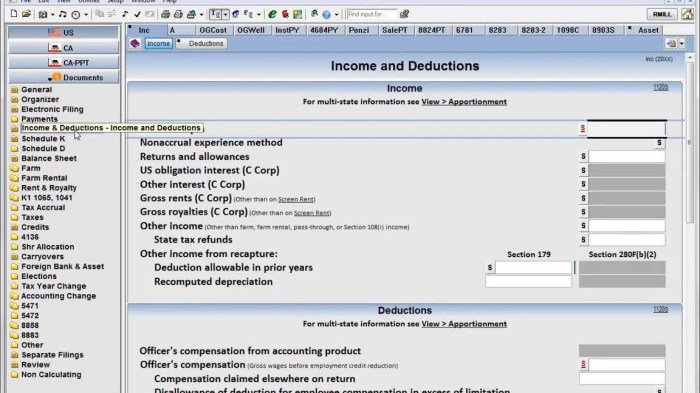
Tax preparation is the process of compiling, calculating, and filing tax returns to the relevant tax authorities. It involves organizing financial information, determining tax liabilities, and submitting accurate documentation within the stipulated deadline.
Key Documents Required for Tax Preparation
- W-2 forms: These show the wages earned and taxes withheld by an employer.
- 1099 forms: Including income from freelance work, dividends, or interest.
- Receipts for deductible expenses: Such as medical expenses, charitable donations, and business expenses.
- Bank statements and investment income statements: To report interest, dividends, and capital gains.
- Previous year’s tax return: To reference information and ensure consistency.
Benefits of Using Tax Preparation Software
- Accuracy: Tax preparation software helps reduce errors in calculations and ensures compliance with tax laws.
- Convenience: It streamlines the process by guiding users through the necessary steps and automatically filling in forms.
- Time-saving: Automation features speed up the process, saving time compared to manual preparation.
- Maximized deductions: Software can identify potential deductions and credits that may be overlooked when preparing taxes manually.
- Filing options: Many tax preparation software programs offer e-filing options, making it easier to submit returns electronically.
Tax Optimization
Tax optimization is the strategic planning and structuring of financial affairs to minimize tax liabilities within the legal framework. It involves utilizing various tax-saving techniques and strategies to reduce the amount of taxes owed, ultimately maximizing after-tax income or profits.
Examples of Tax Optimization Techniques
- Utilizing tax-advantaged accounts such as retirement plans to defer taxes on income.
- Claiming all eligible deductions and credits to reduce taxable income.
- Implementing income splitting strategies for families to lower overall tax burden.
- Investing in tax-efficient investment vehicles to minimize capital gains taxes.
How Businesses Can Optimize Their Taxes Legally
- Choosing the right business structure, such as an LLC or S-corporation, to take advantage of tax benefits.
- Making strategic decisions on expenses and investments to maximize deductions.
- Utilizing tax credits for research and development, energy efficiency, or hiring employees from certain groups.
- Engaging in tax planning throughout the year to stay ahead of changes in tax laws and regulations.
Tax Returns
Tax returns are documents that individuals or businesses file with the government to report their income, expenses, and other financial information for a specific period. These returns are used to calculate the amount of tax owed to the government or the refund owed to the taxpayer.
Maximizing Tax Returns
- Keep track of all eligible deductions and credits to reduce taxable income.
- Contribute to retirement accounts or Health Savings Accounts to lower taxable income.
- Take advantage of tax-deferred investment accounts like IRAs and 401(k)s.
- Consider itemizing deductions instead of taking the standard deduction if it results in a larger tax benefit.
- Consult with a tax professional to ensure you are maximizing all available tax-saving opportunities.
Filing Methods
There are different methods for filing tax returns, each with its own pros and cons. Here is a comparison between online and paper filing:
| Online Filing | Paper Filing |
|---|---|
| Convenient and faster process | May take longer processing time |
| Less chance of errors due to built-in checks | Higher chance of mistakes without automated guidance |
| Receive refunds quicker through direct deposit | Refunds may take longer to receive via mail |
| Environmentally friendly option | Requires printing and mailing forms |
Conclusively, embracing tax preparation software can revolutionize your approach to taxes, offering efficiency, accuracy, and peace of mind in navigating the complex landscape of financial management.
Common Queries
What are the key benefits of using tax preparation software?
Using tax preparation software can streamline the process, reduce errors, maximize deductions, and ensure compliance with tax laws.
How does tax optimization differ from tax planning?
Tax planning focuses on strategies to minimize tax liability in the future, while tax optimization involves maximizing deductions and credits in the current tax year.
Is it better to file tax returns online or via paper filing?
Online filing is generally faster, more convenient, and reduces the risk of errors compared to paper filing.


