
Delve into the realm of tax optimization for high-income earners as we explore effective strategies and insightful tips to maximize savings and financial efficiency. From planning to preparation, this guide offers a comprehensive look at navigating the complex world of taxes for individuals with substantial incomes.
Tax Planning
Tax planning is a crucial financial strategy for high-income earners to minimize the amount of taxes paid to the government while staying compliant with the law. By strategically organizing your finances and investments, you can take advantage of various deductions, credits, and exemptions to optimize your tax liability.
Strategies for Tax Planning
- Maximize retirement contributions: Contributing the maximum amount allowed to retirement accounts like 401(k)s and IRAs can lower your taxable income.
- Invest in tax-efficient accounts: Consider investing in tax-efficient vehicles such as index funds or municipal bonds to reduce tax liability on investment gains.
- Take advantage of tax deductions: Keep track of deductible expenses such as mortgage interest, charitable donations, and medical expenses to lower your taxable income.
- Plan for capital gains: Timing the realization of capital gains and losses can help minimize taxes on investment returns.
Importance of Tax Planning
Effective tax planning is essential for high-income earners as it allows them to retain more of their hard-earned money. By strategically managing their finances and taking advantage of available tax breaks, individuals can maximize their savings and build wealth over time. Failing to plan for taxes can result in paying more than necessary and missing out on opportunities to grow their financial assets.
Tax Preparation
When it comes to tax preparation for individuals with high income, the process can be more complex and time-consuming compared to those with lower incomes. High-income earners often have various investment portfolios, multiple sources of income, and more deductions and credits to consider. It is crucial to ensure accurate and efficient tax preparation to maximize savings and avoid potential audit risks.
Key Documents for Tax Preparation
- W-2 forms from all employers
- 1099 forms for any additional income, such as dividends, interest, or freelance work
- Investment statements, including brokerage statements and annual summaries
- Receipts for deductible expenses, such as charitable donations, medical expenses, and business expenses
- Mortgage interest statements and property tax records
- Records of any retirement account contributions
DIY vs. Hiring a Professional
For high-income earners, the decision to prepare taxes on their own or hire a professional can depend on various factors. Here are some considerations:
- DIY Tax Preparation: High-income individuals who are comfortable navigating tax laws and regulations may choose to prepare their taxes themselves using tax software. This option can save money on professional fees but requires a thorough understanding of tax laws to ensure accuracy.
- Hiring a Professional: Many high-income earners opt to hire a tax professional, such as a certified public accountant (CPA) or tax attorney, to handle their tax preparation. Professionals can provide valuable advice on tax-saving strategies, ensure compliance with complex tax laws, and potentially uncover deductions or credits that may have been overlooked.
Tax Optimization
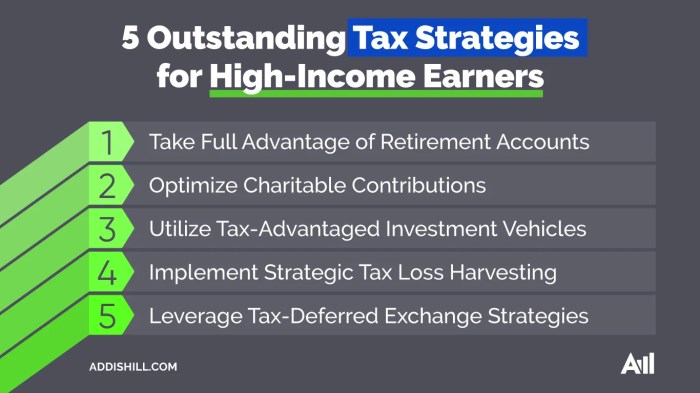
When it comes to tax optimization for high-income earners, there are several strategies that can be employed to minimize tax liability while maximizing financial gains.
Investments for Tax Optimization
Investments play a crucial role in tax optimization for high-income earners. By strategically investing in tax-efficient accounts such as retirement plans like 401(k)s or IRAs, individuals can reduce their taxable income and grow their wealth over time. Additionally, investments in tax-free municipal bonds or tax-deferred annuities can also help in lowering tax burdens.
Charitable Donations for Tax Optimization
Charitable donations are another effective way for high-income earners to optimize their taxes. By donating to qualified charities, individuals can deduct the value of their donations from their taxable income, reducing the amount of taxes owed. It’s important to keep detailed records of donations and ensure they are made to eligible organizations to claim tax benefits.
Tax Returns
Filing tax returns is a crucial step in managing finances for high-income individuals. It involves reporting income, deductions, and credits to determine the final tax liability.
Steps in Filing Tax Returns
- Gather all necessary documents, including W-2 forms, 1099s, and receipts for deductions.
- Choose the right tax form based on your financial situation, whether it’s a 1040, 1040A, or 1040EZ.
- Report all sources of income accurately, including wages, investments, and any other earnings.
- Claim all eligible deductions and credits to reduce taxable income.
- Double-check all information before submitting the tax return to avoid errors or discrepancies.
Common Mistakes to Avoid when Filing Tax Returns
- Not reporting all sources of income, leading to underreporting and potential penalties.
- Forgetting to sign the tax return before submitting, which can cause delays in processing.
- Misinterpreting tax laws and missing out on valuable deductions and credits.
- Waiting until the last minute to file, increasing the chances of errors and overlooking important details.
- Not seeking professional help when needed, especially for complex tax situations.
Tips to Maximize Deductions and Credits in Tax Returns
- Keep track of all expenses that are eligible for deductions, such as medical expenses, charitable contributions, and business expenses.
- Consider tax-efficient investments, such as retirement accounts and tax-advantaged savings plans.
- Take advantage of tax credits for education, energy-efficient home improvements, and other qualifying expenses.
- Consult with a tax professional to ensure you are maximizing all available deductions and credits based on your specific financial situation.
In conclusion, mastering the art of tax optimization can lead to significant financial benefits for high-income earners. By employing the right strategies and staying informed, individuals can ensure they are making the most of their earnings while minimizing tax liabilities.
FAQ Section
How can tax planning benefit high-income earners?
Tax planning can help high-income earners reduce their tax liabilities by implementing strategies that optimize deductions and credits, ultimately maximizing savings.
What key documents are essential for tax preparation for individuals with high income?
Key documents include W-2 forms, 1099s, investment statements, mortgage interest statements, and any other income-related documents.
How can investments play a role in tax optimization for high-income earners?
Investments such as retirement accounts and tax-efficient funds can help reduce taxable income, leading to lower tax obligations for high-income individuals.
What are some common mistakes to avoid when filing tax returns as a high-income individual?
Common mistakes include miscalculations, missing deadlines, and not taking advantage of all available deductions and credits.
How can charitable donations be utilized for tax optimization by high-income earners?
Charitable donations can be deducted from taxable income, providing a way for high-income earners to support causes they care about while reducing their tax burden.


