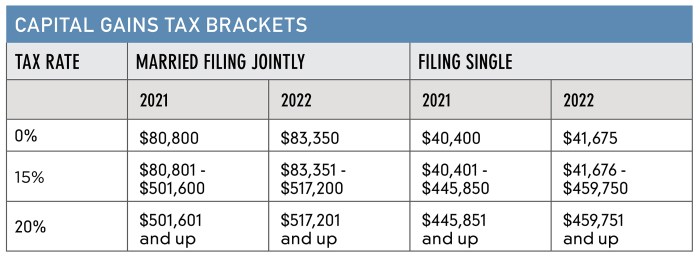
Tax planning for capital gains sets the stage for this enthralling narrative, offering readers a glimpse into a story that is rich in detail with casual formal language style and brimming with originality from the outset.
Understanding capital gains, minimizing taxes, and optimizing returns are key components of effective tax planning. This guide delves into the intricacies of these strategies, providing valuable insights for maximizing financial gains while minimizing tax liabilities.
Tax Planning for Capital Gains

Capital gains are the profits earned from the sale of assets such as stocks, real estate, or other investments. In taxation, these gains are subject to capital gains tax, which is calculated based on the difference between the purchase price and the selling price of the asset.
Minimizing Capital Gains Taxes
- Utilize tax-advantaged accounts such as IRAs or 401(k)s to defer or reduce capital gains taxes.
- Consider holding onto assets for over a year to qualify for lower long-term capital gains tax rates.
- Offset capital gains with capital losses by strategically selling investments at a loss to minimize taxable gains.
- Donate appreciated assets to charity to avoid paying capital gains tax while also receiving potential tax deductions.
Importance of Timing in Capital Gains Tax Planning
Timing plays a crucial role in capital gains tax planning as the duration of holding an asset can significantly impact the tax liability. For instance, selling an asset held for less than a year may result in higher short-term capital gains tax rates compared to holding it for over a year to qualify for lower long-term rates. Therefore, strategic timing of asset sales can help minimize tax obligations and maximize overall returns.
Tax Preparation for Capital Gains
When it comes to tax preparation for capital gains, there are certain key aspects to consider in order to accurately report your gains and avoid any potential mistakes that could lead to penalties. Understanding the documentation required, how to calculate capital gains, and common errors to steer clear of is essential for a smooth tax filing process.
Documentation Required for Reporting Capital Gains
Before you begin calculating your capital gains for tax purposes, it’s crucial to gather all the necessary documentation to support your claims. The following documents are typically needed:
- Brokerage statements showing the purchase and sale of assets
- Records of reinvested dividends or capital gains distributions
- Receipts for any improvements made to the assets
- Gift or inheritance documentation, if applicable
Calculating Capital Gains for Tax Purposes
Calculating capital gains involves determining the difference between the sale price of an asset and its original purchase price. The formula for calculating capital gains is:
Capital Gains = Sale Price – Purchase Price – Expenses
It’s important to accurately calculate your gains to ensure you report the correct amount on your tax return and avoid any discrepancies with the IRS.
Common Mistakes to Avoid During Tax Preparation for Capital Gains
When preparing your taxes involving capital gains, there are common errors that should be avoided to prevent any issues with the IRS. Some mistakes to steer clear of include:
- Incorrectly calculating gains or losses
- Forgetting to report reinvested dividends or distributions
- Not adjusting the cost basis for improvements made to the asset
- Missing deadlines for filing and reporting capital gains
Tax Optimization Strategies
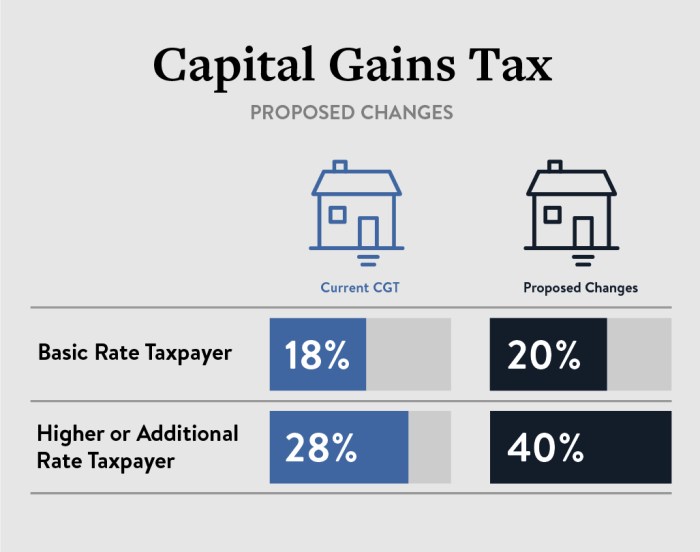
When it comes to optimizing taxes on capital gains, there are various strategies that investors can employ to minimize their tax liability and maximize their returns.
Exploring Investment Vehicles
One effective strategy for tax optimization is to explore different investment vehicles that offer tax advantages for capital gains. For example, investing in tax-efficient mutual funds or exchange-traded funds (ETFs) can help reduce the tax impact on your gains.
Short-term vs. Long-term Capital Gains Tax Rates
It’s essential to understand the difference between short-term and long-term capital gains tax rates. Short-term capital gains, which are gains from assets held for one year or less, are typically taxed at higher rates than long-term capital gains, which are gains from assets held for more than one year. By holding investments for the long term, investors can benefit from lower tax rates on their gains.
Tax-efficient Ways to Reinvest Capital Gains
Reinvesting capital gains in tax-efficient ways can also help investors optimize their taxes. For example, instead of cashing out your gains, consider reinvesting them in tax-advantaged accounts like a 401(k) or an Individual Retirement Account (IRA). This can defer taxes on your gains and allow your investments to grow tax-free until withdrawal.
Tax Returns and Capital Gains
When it comes to tax returns and capital gains, it is crucial to accurately report any gains made from the sale of assets or investments. Failing to report capital gains correctly can lead to penalties and legal consequences.
Reporting Capital Gains
- Capital gains are reported on Schedule D of Form 1040 for individual tax returns.
- For businesses, capital gains are reported on Form 4797.
- It is important to differentiate between short-term capital gains (assets held for less than a year) and long-term capital gains (assets held for more than a year) as they are taxed at different rates.
Forms for Reporting Capital Gains
- Individual taxpayers need to use Form 8949 to report capital gains and losses, which then flows into Schedule D.
- For businesses, Form 4797 is used to report gains or losses from the sale of business property.
- Partnerships and S corporations may use Form 1065 or Form 1120S to report capital gains.
Implications of Inaccurate Reporting
- Failure to report capital gains accurately can result in penalties and fines from the IRS.
- Underreporting or omitting capital gains can trigger an audit, leading to further scrutiny of your tax return.
- It is essential to keep detailed records of all transactions involving capital gains to ensure accurate reporting.
In conclusion, tax planning for capital gains is a crucial aspect of financial management. By implementing the right strategies, individuals can secure their financial future and make the most of their investments. Stay informed, plan wisely, and reap the benefits of tax-efficient capital gains.
FAQ Corner
How can I minimize capital gains taxes?
To minimize capital gains taxes, consider strategies such as tax-loss harvesting, investing in tax-advantaged accounts, and holding investments for the long term.
What forms are needed to report capital gains?
Forms like Form 8949 and Schedule D are commonly used to report capital gains on tax returns.
What are the implications of failing to report capital gains accurately?
Failing to report capital gains accurately can lead to penalties, interest charges, and legal consequences. It’s important to ensure proper reporting to avoid any issues with the IRS.


