
With Tax planning for high-income earners at the forefront, this paragraph opens a window to an amazing start and intrigue, inviting readers to embark on a storytelling casual formal language style filled with unexpected twists and insights.
Tax planning for high-income earners is a crucial aspect for those with substantial incomes, offering insights into optimizing financial strategies and minimizing tax burdens effectively. This comprehensive guide delves into key strategies, tax optimization techniques, planning tips, and more to help high-income individuals navigate the complex world of tax planning with ease and efficiency.
Overview of Tax Planning for High-Income Earners

Tax planning is crucial for individuals with high incomes as it helps them minimize their tax liabilities legally and efficiently. High-income earners often face complex tax situations due to their multiple income sources and investments, making it essential to have a well-thought-out tax strategy in place.
Key Strategies for High-Income Earners
- Utilizing tax-advantaged accounts such as 401(k) and IRAs to save for retirement and reduce taxable income.
- Implementing tax-loss harvesting to offset capital gains with capital losses in investment portfolios.
- Strategically timing income and deductions to maximize tax savings in high-income years.
- Engaging in charitable giving to benefit from tax deductions while supporting causes important to the individual.
Differences in Tax Planning for High-Income Earners
Unlike individuals with average incomes, high-income earners often have access to more tax planning opportunities such as specialized tax credits and deductions. They may also face higher tax rates and additional tax implications on investments, requiring a more sophisticated approach to tax planning.
Tax Optimization Techniques
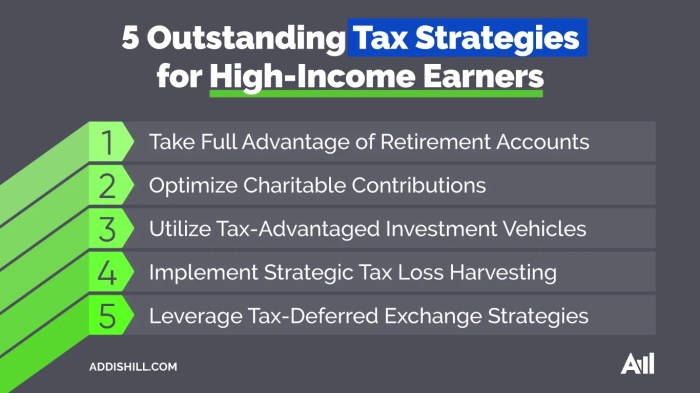
When it comes to tax optimization for high-income earners, there are several strategies that can be utilized to maximize tax efficiency and minimize overall tax liability. These techniques often involve making strategic decisions around investments, deductions, and credits to ensure that individuals are taking full advantage of available opportunities to reduce their tax burden.
Investment Strategies
One common tax optimization technique for high-income earners is to focus on tax-efficient investment strategies. This may include investing in tax-advantaged accounts such as retirement plans or utilizing investment vehicles that offer preferential tax treatment, such as municipal bonds. By strategically allocating investments in a tax-efficient manner, individuals can reduce the amount of taxable income and potentially lower their overall tax bill.
Deduction Planning
Another key aspect of tax optimization for high-income earners is deduction planning. This involves maximizing available deductions, such as those for charitable contributions, mortgage interest, or medical expenses. By carefully tracking and claiming all eligible deductions, individuals can lower their taxable income and ultimately reduce the amount of taxes owed to the government.
Utilizing Tax Credits
High-income earners can also benefit from utilizing tax credits to optimize their tax situation. Tax credits directly reduce the amount of taxes owed, making them a valuable tool for lowering overall tax liability. Examples of tax credits that may be available to high-income earners include the Child Tax Credit, Retirement Savings Contributions Credit, or Education Credits. By taking advantage of these credits, individuals can significantly reduce their tax burden and keep more of their hard-earned money.
Tax Planning Strategies for Wealthy Individuals
When it comes to tax planning for wealthy individuals, there are specific strategies that can be tailored to their unique financial situations. These strategies aim to minimize tax liabilities while maximizing wealth accumulation and preservation.
Estate Planning and Tax Planning
Estate planning is a crucial component of tax planning for high-income earners. By strategically structuring their estate plans, wealthy individuals can minimize estate taxes and ensure a smooth transfer of wealth to future generations. This may involve setting up trusts, establishing gifting strategies, and utilizing other estate planning tools to optimize tax efficiency.
Impact of Charitable Giving on Tax Planning
Charitable giving plays a significant role in tax planning and optimization for wealthy individuals. By donating to qualified charitable organizations, high-income earners can benefit from tax deductions while supporting causes they care about. Charitable giving can help reduce taxable income, lower estate tax liabilities, and leave a lasting impact on society.
Tax Preparation Tips for High-Income Earners
When it comes to tax preparation for high-income earners, taking the right steps can help minimize tax liability and ensure compliance with regulations. Here are some tips to consider:
Checklist of Documents and Information Needed
- Income statements: W-2 forms, 1099s, investment income statements
- Expense receipts: for charitable donations, business expenses, medical expenses
- Documentation for deductions: mortgage interest, property taxes, educational expenses
- Records of retirement account contributions
- Information on any foreign assets or income
Common Pitfalls to Avoid
- Missing deadlines: Ensure all tax documents are submitted on time to avoid penalties.
- Overlooking deductions: Take advantage of all eligible deductions to reduce taxable income.
- Ignoring tax planning: Regular tax planning throughout the year can help optimize tax strategies.
- Not seeking professional help: High-income earners may benefit from consulting with a tax advisor or accountant.
In conclusion, Tax planning for high-income earners presents a roadmap to financial success by harnessing the power of strategic tax planning. By implementing the right strategies and staying informed about the latest tax laws, individuals can secure their wealth and achieve their financial goals with confidence.
Quick FAQs
What are the key benefits of tax planning for high-income earners?
Strategic tax planning can help high-income earners reduce their tax liabilities, maximize wealth accumulation, and ensure compliance with tax laws.
How does estate planning intersect with tax planning for wealthy individuals?
Estate planning is essential for wealthy individuals as it helps in minimizing estate taxes, ensuring smooth wealth transfer, and protecting family assets.
What role do investments play in tax optimization for high-income earners?
Investments can provide opportunities for tax-efficient growth, capital gains tax deferral, and deductions that contribute to overall tax optimization strategies.


