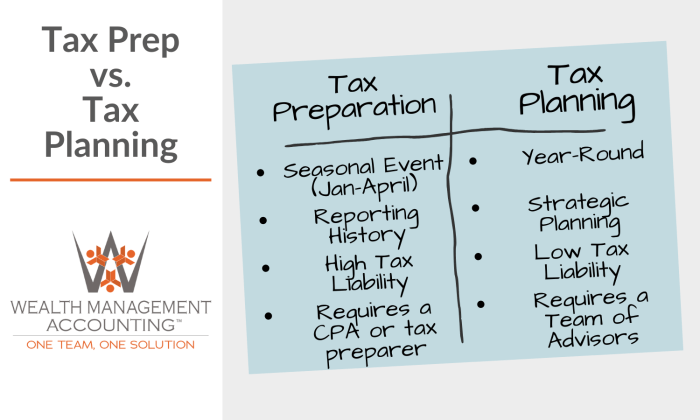
With Tax planning vs tax preparation at the forefront, this paragraph opens a window to an amazing start and intrigue, inviting readers to embark on a storytelling filled with unexpected twists and insights. Tax planning involves strategizing to minimize tax liabilities, while tax preparation focuses on accurately filing tax returns. Let’s delve into the intricacies of these essential financial processes.
Tax Planning vs Tax Preparation

Tax planning and tax preparation are two essential components of managing finances effectively. While both are related to taxes, they serve different purposes and involve distinct strategies and tasks.Tax planning involves analyzing a taxpayer’s financial situation to optimize tax efficiency. This includes strategizing to reduce tax liability through various methods such as deductions, credits, and investments. For example, setting up a retirement account to benefit from tax-deferred growth is a tax planning strategy aimed at minimizing taxes in the long run.On the other hand, tax preparation focuses on the process of calculating and filing taxes accurately and timely.
This involves gathering all necessary financial information, completing tax forms, and submitting them to the appropriate tax authorities. Tax preparation tasks include organizing receipts, filling out tax forms, and ensuring compliance with tax laws and regulations.Both tax planning and tax preparation are crucial in financial management. Tax planning helps individuals and businesses minimize tax liability and maximize savings, while tax preparation ensures that taxes are filed correctly and on time to avoid penalties.
By combining effective tax planning strategies with meticulous tax preparation, taxpayers can navigate the complex tax system more efficiently and make the most of their financial resources.
Tax Optimization
Tax optimization refers to the strategic planning and management of finances to minimize tax liability while maximizing savings and benefits. It involves utilizing legal methods and techniques to reduce the amount of taxes owed, whether for individuals or businesses.
Strategies for Tax Optimization
- Utilize tax-advantaged accounts such as 401(k)s or IRAs to save for retirement while reducing taxable income.
- Take advantage of tax deductions and credits available for specific expenses, such as education, healthcare, or charitable contributions.
- Strategically time capital gains and losses to minimize tax implications on investments.
- Consider income shifting strategies within a family or business to distribute income in a tax-efficient manner.
- Invest in tax-efficient investment vehicles like municipal bonds or index funds to minimize taxable gains.
Comparison with Tax Planning and Tax Preparation
Tax optimization goes beyond tax planning and tax preparation by focusing on proactive strategies to minimize tax liability and maximize savings. While tax planning involves setting goals and making decisions to achieve the desired tax outcome, tax preparation focuses on accurately filing tax returns based on past financial activities.Tax optimization, on the other hand, involves ongoing analysis and adjustments to financial decisions throughout the year to optimize tax benefits.
It requires a deep understanding of tax laws and regulations to implement effective strategies that align with individual or business goals for long-term financial success.
Tax Returns
Tax returns are documents filed with the government detailing an individual or entity’s income, expenses, and other financial information for the purpose of calculating tax liability. The process of filing tax returns involves gathering all relevant financial documents, completing the necessary forms, and submitting them to the appropriate tax authorities by the deadline.Tax planning plays a crucial role in the preparation of tax returns as it helps individuals and businesses organize their finances in a way that minimizes tax liability.
By strategically planning ahead, taxpayers can take advantage of deductions, credits, and other tax-saving opportunities to reduce the amount of taxes owed when filing their returns.
Impact of Tax Planning on Tax Returns
Tax planning can have a significant impact on the outcome of tax returns. By proactively managing finances throughout the year, individuals and businesses can optimize their tax situation and potentially lower their tax bill. This can be achieved through strategies such as maximizing deductions, utilizing tax-advantaged accounts, and structuring investments in a tax-efficient manner.
- Regularly review and update your tax plan to ensure it aligns with your financial goals and current tax laws.
- Consult with a tax professional to get personalized advice and guidance on tax planning strategies that are most suitable for your situation.
- Keep detailed records of all financial transactions and expenses to support deductions and credits claimed on your tax return.
Common Mistakes to Avoid during Tax Return Preparation
When preparing tax returns, it’s important to be diligent and accurate to avoid costly mistakes that could result in penalties or audits. Some common mistakes to avoid include:
- Incorrectly reporting income or deductions
- Missing deadlines for filing tax returns
- Not keeping proper documentation to support tax claims
- Failing to review and double-check your tax return for errors
In conclusion, understanding the distinction between tax planning and tax preparation is crucial for effective financial management. By implementing the right strategies and approaches, individuals and businesses can navigate the complexities of taxation with confidence and efficiency.
FAQ Overview
What is the main difference between tax planning and tax preparation?
Tax planning involves strategic maneuvers to minimize tax liabilities in the long term, while tax preparation focuses on accurately filing tax returns for a specific period.
How does tax optimization differ from tax planning and tax preparation?
Tax optimization focuses on maximizing tax efficiency through proactive strategies, while tax planning and preparation are more reactive processes to manage current and future tax obligations.
How does tax planning impact tax returns?
Effective tax planning can help individuals and businesses reduce their tax burden by utilizing legal deductions and credits, ultimately leading to lower tax liabilities on their returns.


