
With How to reduce taxes through tax optimization at the forefront, this paragraph opens a window to an amazing start and intrigue, inviting readers to embark on a storytelling journey filled with unexpected twists and insights.
Tax planning, preparation, optimization, and filing accurate tax returns are essential components for individuals and businesses looking to minimize their tax burden and maximize savings. Let’s delve into the world of tax optimization and discover the strategies that can lead to financial success.
Tax Planning
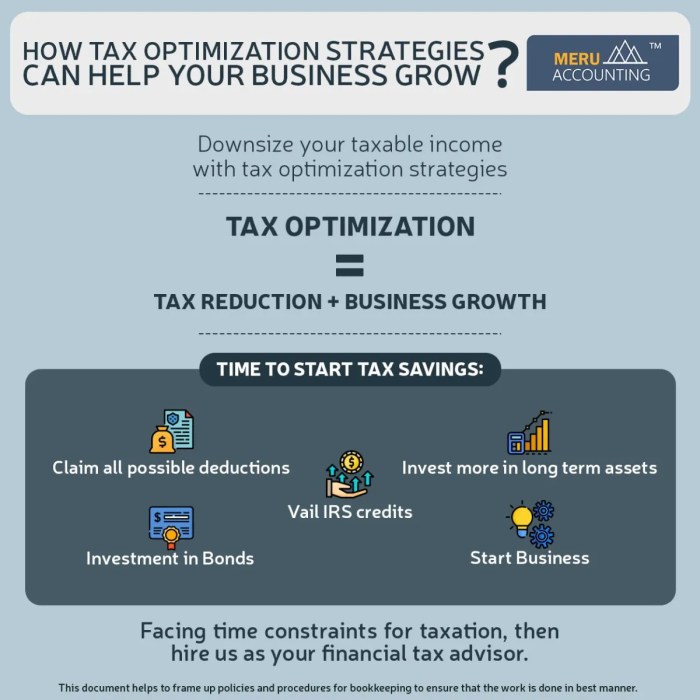
Tax planning is a crucial aspect of financial management that involves analyzing a person’s or business’s financial situation to ensure that they pay the right amount of taxes. By strategically organizing their finances, individuals and businesses can reduce their tax liabilities, maximize tax efficiency, and ultimately keep more of their hard-earned money.
Tax Planning Strategies
- Utilizing tax-advantaged accounts such as IRAs and 401(k)s to save for retirement while reducing taxable income.
- Timing capital gains and losses to offset each other and minimize tax obligations.
- Maximizing tax deductions by keeping track of expenses that qualify for tax deductions, such as business expenses, medical expenses, and mortgage interest.
- Strategically gifting assets to reduce estate taxes and transfer wealth to beneficiaries tax-efficiently.
Short-term vs. Long-term Goals
Tax planning can involve both short-term and long-term goals. Short-term tax planning focuses on immediate strategies to reduce taxes for the current year, such as maximizing deductions or credits. On the other hand, long-term tax planning involves creating a comprehensive tax strategy that spans several years, considering factors like retirement planning, estate planning, and investment strategies to minimize taxes over time.
Tax Preparation

When it comes to tax preparation, the process involves gathering all necessary financial documents, organizing them, and accurately filing your tax return. This ensures that you comply with tax laws and regulations while maximizing your tax benefits.
Documents Required for Tax Preparation
- Gather W-2 forms from your employer(s) for reporting your income.
- Collect 1099 forms for any additional income sources, such as freelance work or investments.
- Keep receipts for any deductible expenses, such as medical costs, charitable donations, or business expenses.
- Have documentation for any tax credits you may qualify for, like education credits or child tax credits.
- Keep records of any retirement account contributions or investments for capital gains reporting.
Tax Software vs. Hiring a Professional
- Using Tax Software: Tax software can be a cost-effective and convenient option for simple tax situations. It guides you through the process and helps you identify deductions and credits. However, it may not be suitable for complex tax scenarios.
- Hiring a Professional: A tax professional can provide personalized advice, maximize deductions, and ensure compliance with tax laws. They can also represent you in case of an audit. This option is beneficial for those with complex financial situations.
Organizing Financial Records
- Set up a filing system to keep all your financial documents organized throughout the year.
- Use digital tools or apps to track expenses, income, and receipts for easy access during tax season.
- Create separate folders for different types of documents, such as income statements, deductions, and credits.
- Regularly review and update your financial records to ensure accuracy and completeness.
Tax Optimization
Tax optimization is the strategic planning and structuring of finances to minimize tax liability and maximize deductions and credits. It goes beyond tax planning by focusing on long-term strategies to reduce overall tax burden.
Advanced Strategies for Tax Optimization
- Utilizing tax-efficient investments such as retirement accounts, municipal bonds, and index funds to lower taxable income and capital gains.
- Implementing income splitting strategies for married couples or families to take advantage of lower tax brackets.
- Maximizing tax deductions by strategically timing expenses, such as medical bills or charitable donations, to optimize tax benefits.
Role of Tax Optimization in Maximizing Deductions and Credits
- By carefully planning deductions and credits, individuals can reduce taxable income and potentially qualify for additional tax breaks.
- Optimizing deductions and credits can lead to significant savings on taxes owed, allowing individuals to keep more of their hard-earned money.
- Regularly reviewing and adjusting tax optimization strategies can help individuals adapt to changes in tax laws and regulations, ensuring continued tax savings.
Tax Returns
When it comes to tax returns, accuracy is key. Filing your tax returns correctly and on time is crucial to avoid penalties and ensure compliance with the law. Here, we will discuss the importance of filing accurate tax returns, common mistakes to avoid, and how to rectify errors if they occur.
Importance of Filing Accurate Tax Returns
Submitting accurate tax returns is essential to avoid facing penalties or audits from tax authorities. It ensures that you are paying the correct amount of taxes based on your income and deductions. Inaccurate returns can lead to fines, interest charges, and even legal consequences, so it’s crucial to double-check all information before submission.
Common Mistakes to Avoid
- Math errors: Simple miscalculations can lead to discrepancies in your tax returns. Always double-check your calculations or consider using tax preparation software to avoid math mistakes.
- Missing information: Forgetting to include vital details such as income sources, deductions, or credits can result in underpayment or overpayment of taxes. Make sure to have all necessary documents and information on hand when filing.
- Filing status errors: Choosing the wrong filing status can impact your tax liability significantly. Be sure to select the correct status based on your situation, whether it’s single, married filing jointly, or another option.
Consequences of Errors in Tax Returns and How to Rectify Them
Errors in tax returns can lead to penalties, interest charges, or even audits by the IRS. If you realize you made a mistake after filing, the best course of action is to file an amended return as soon as possible. This allows you to correct any errors and prevent further complications down the line. Consult with a tax professional if you’re unsure how to proceed with rectifying mistakes in your tax returns.
In conclusion, mastering the art of tax optimization can significantly impact your financial well-being. By implementing the right strategies and staying informed about tax laws, you can reduce your tax liability and secure a brighter financial future. Take control of your taxes and watch your savings grow!
Questions Often Asked
What is the difference between tax planning and tax optimization?
Tax planning involves creating a roadmap to reduce taxes, while tax optimization focuses on maximizing deductions and credits to minimize tax liability.
How can tax-efficient investments help with tax optimization?
Tax-efficient investments are designed to generate income with minimal tax impact, allowing individuals to reduce their overall tax burden.
What are the consequences of errors in tax returns?
Errors in tax returns can lead to penalties, interest charges, and audits by tax authorities. It’s crucial to file accurate returns to avoid these issues.


